
The Tiny Craft Rule: Why Small Creative Projects Can Feel More Relaxing Than Big Ones
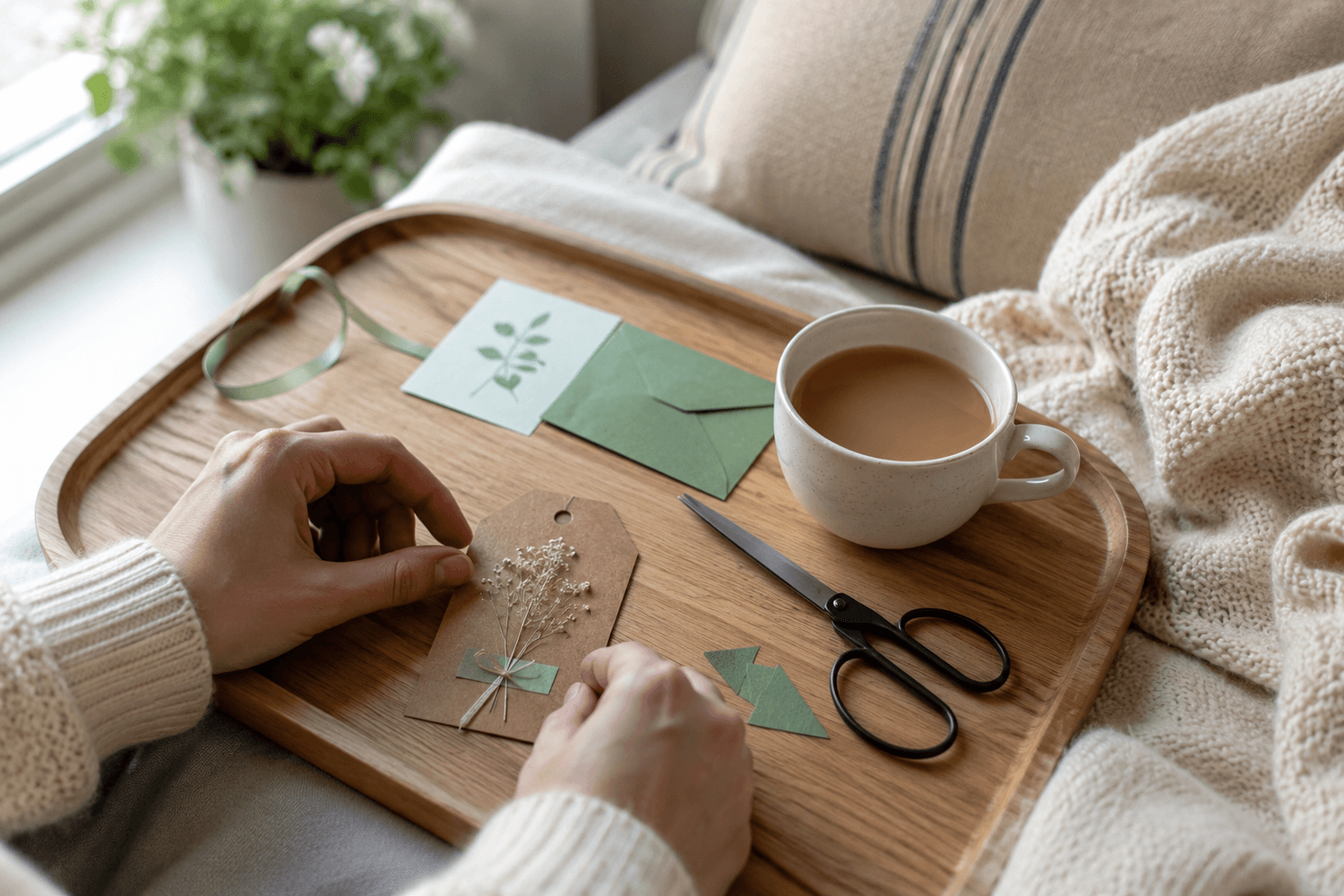
Sometimes the most relaxing craft is not the biggest one.
It is not always the project with the most supplies, the longest instructions, or the most impressive finished result. Often, the craft that feels best is the one you can actually begin.
A small project.
A simple idea.
A little creative step that feels doable today.
That is the heart of the Tiny Craft Rule.
The Tiny Craft Rule means choosing creative projects that are small enough to feel welcoming, simple enough to begin, and satisfying enough to give you a gentle sense of completion.
It is a helpful way to enjoy craft time without turning it into another task on your list.
Why Big Craft Projects Can Feel Heavy
Large craft projects can be beautiful, but they can also feel demanding.
They may require:
• lots of supplies
• a clear workspace
• several hours of time
• multiple steps
• drying time
• careful planning
• storage space
• cleanup afterward
That does not mean big projects are bad. Sometimes they are wonderful.
But if you are tired, busy, or already feeling stretched, a large project may feel like too much before you even begin.
You might find yourself thinking:
“I’ll start when I have more time.”
“I need to organize my supplies first.”
“I don’t want to make a mess.”
“I’m not sure I’ll finish it.”
“I’ll wait until I can do it properly.”
And then the project waits.
Tiny crafts help remove that barrier.
What Makes a Craft “Tiny”?
A tiny craft does not have to be physically tiny. It simply means the project feels manageable.
A tiny craft might be:
• quick to start
• easy to understand
• low-cost
• low-mess
• simple to finish
• relaxing to repeat
• easy to pause and return to
• enjoyable even if it is not perfect
It might be a small handmade card, a cut-out Calm Card, a decorated bookmark, a simple paper craft, a small gift tag, a mini collage, a printable craft page, or one step from a larger project.
The goal is not to make the project less meaningful.
The goal is to make it easier to enjoy.
Small Projects Create Small Creative Wins
One reason tiny crafts feel so good is that they give you a small creative win.
A small creative win is that quiet feeling of:
“I made something.”
It does not have to be grand. It does not have to impress anyone. It does not have to take hours.
It simply gives you a feeling of completion.
That feeling can be surprisingly calming.
When you finish a small craft, you may feel:
• more grounded
• more capable
• more creative
• more satisfied
• more connected to your hands
• more willing to create again another day
This is why Quick Calm Crafts can be so valuable. They are not meant to overwhelm you. They are meant to help you begin, enjoy, and finish something in a gentle way.
The Best Craft Is Often the One You Can Start Today
A beautiful project that never gets started cannot give you much joy.
A small project you actually begin can.
That is why tiny crafts are so useful. They fit into real life.
You might have ten minutes after lunch, a quiet evening, a little time before bed, or a short pocket of space between other things. A tiny craft can fit there.
It does not ask you to rearrange your whole day.
It simply says:
“Start here.”
That may be all you need.
Keep the Supplies Simple
A tiny craft works best when the supplies are easy to gather.
The more supplies you need, the harder it can feel to begin.
For a Quick Calm Craft, try keeping a small basic supply kit nearby.
It could include:
• scissors
• glue stick
• pencils or markers
• plain paper
• a few printed pages
• small envelopes
• ribbon or string
• a folder for saved printables
• a small container for paper pieces
You do not need everything.
A few simple supplies can support many small projects.
When your supplies are easy to reach, crafting becomes less of an event and more of a peaceful little option.
Choose Crafts With a Clear Finish Line
One thing that makes a tiny craft relaxing is a clear finish line.
A clear finish line helps you know when the project is complete.
For example:
• cut out one card
• decorate one bookmark
• fold one paper pocket
• make one gift tag
• color one small printable piece
• prepare one envelope
• assemble one mini set
• finish one page of a project sheet
This gives the craft shape.
You know where to begin, and you know where to stop.
That can make the project feel much lighter than something open-ended.
Tiny Crafts Are Perfect for Low-Energy Days
Not every day is a big creative day.
Some days you may feel inspired and ready to make something from start to finish. Other days you may only have enough energy for something small.
Tiny crafts are perfect for those lower-energy days.
You can choose a craft that matches the energy you have, instead of forcing yourself into a project that feels too much.
On a tired day, you might:
• choose one printable for later
• cut out one small piece
• gather supplies into a folder
• decorate one tiny section
• make one simple card
• prepare one craft for tomorrow
That still counts.
You are still giving yourself a small creative moment.
Use the “One Piece Only” Approach
If a craft still feels too big, make it smaller.
Use the One Piece Only approach.
Instead of completing the whole project, choose one piece of it.
For example:
• cut only one card
• fold only one envelope
• decorate only one tag
• choose only the paper
• write only the message
• prepare only the supplies
• make only the sample version
This is especially helpful when you like the idea of a craft but do not feel ready to complete it all at once.
One piece is still progress.
One piece can still be calming.
One piece can make it easier to return later.
Tiny Crafts Can Become Thoughtful Gifts
Small crafts are also lovely because they can become simple gifts.
A tiny craft does not need to be expensive or elaborate to feel meaningful.
It might become:
• a handmade bookmark
• a calming card
• a small encouragement note
• a decorated gift tag
• a mini paper keepsake
• a little envelope with a kind message
• a small printable activity for someone else
• a handmade addition to a gift basket
This is where small crafts can feel especially rewarding.
You begin with a peaceful creative moment for yourself, and the finished piece may become something kind to share.
That gives the craft a gentle extra purpose without making it feel pressured.
Tiny Crafts Are Easier to Repeat
Another benefit of small craft projects is that they are easy to repeat.
If you enjoy making one bookmark, you can make another.
If you enjoy one Calm Card idea, you can create a small set.
If you enjoy one gift tag, you can make a few more for birthdays, thank-you gifts, or special occasions.
Repeating a simple craft can feel soothing because you already know the steps. You are not starting from zero each time.
That makes it easier to relax into the process.
A repeatable craft can become a calm companion — something familiar, gentle, and easy to return to.
How to Choose a Tiny Craft
When choosing a tiny craft, ask yourself a few simple questions:
• Can I start this with supplies I already have?
• Can I understand the project quickly?
• Can I finish a small version today?
• Will it create a lot of mess?
• Does it feel enjoyable rather than stressful?
• Could I pause and return to it easily?
• Would I feel good after making one small piece?
If the answer is mostly yes, it is probably a good tiny craft.
If the project already feels heavy before you begin, simplify it.
Make the first version smaller.
Your Quick Calm Craft does not need to prove anything.
It only needs to give you a peaceful creative win.
How This Helps You Enjoy Your Membership
Your Relaxation Crafts resources are designed to give you gentle creative options.
Tiny crafts help you use those resources without feeling like you need a big plan.
You can look at a Quick Calm Craft and ask:
“What is the smallest version of this I could enjoy today?”
That question changes everything.
Instead of waiting for the perfect time, you can begin with one small step.
Maybe you print the project sheet.
Maybe you gather the supplies.
Maybe you make one sample piece.
Maybe you finish one tiny craft.
Maybe you save the idea for a quiet afternoon.
Each of those choices is a useful way to enjoy your membership.
A Simple Tiny Craft Practice
Here is an easy way to use the Tiny Craft Rule:
Choose one small project.
Gather only the supplies you need.
Set a simple finish line.
Make one piece.
Stop when it feels complete.
That is all.
You can always make more later, but you do not have to.
One small finished craft can be enough.
Tiny Does Not Mean Unimportant
Small crafts can be surprisingly meaningful.
A handmade card can brighten someone’s day.
A small bookmark can make reading feel special.
A printed Calm Card can become a helpful reminder.
A gift tag can make a simple present feel personal.
A small project can help you feel creative again.
Tiny does not mean trivial.
Tiny means approachable.
And approachable creativity is often the kind we return to most.
Gentle Action Step
Before you leave this article, choose one tiny craft idea you could enjoy this week.
Complete this sentence:
“My tiny craft for this week will be…”
Then make it smaller if needed.
Instead of “make a full set of cards,” try “make one card.”
Instead of “organize all my printables,” try “choose one project sheet.”
Instead of “start a craft afternoon,” try “spend a few minutes preparing one small piece.”
Let the project feel easy enough to begin.
Related Resources
If this article inspired you, here are a few gentle next steps:
• Choose one Quick Calm Craft from your member area and look for the smallest version you could enjoy today.
• Keep a few simple supplies together so tiny craft moments are easier to begin.
• Save small giftable craft ideas in a folder or notebook so you can return to them when you want a thoughtful handmade idea.
You do not need a big project to enjoy a meaningful creative moment. One small craft, one simple finish line, and one gentle creative win can be enough.